
Our Patron

image

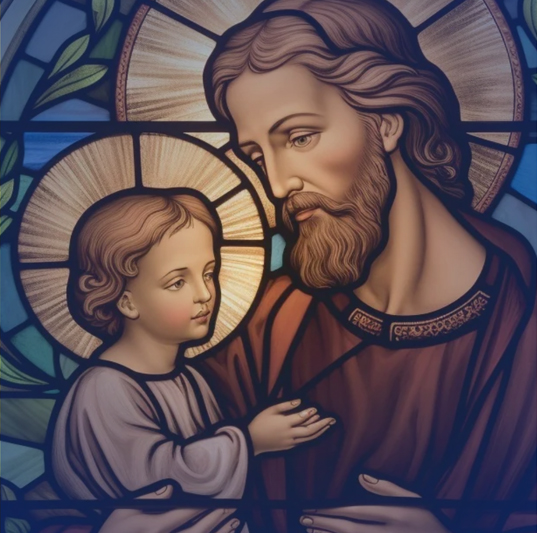
St. Joseph

Saint Joseph holds a special place in the Malankara Orthodox Syrian Church as the righteous guardian of the Holy Family and a model of humility, obedience, and faithful service. Chosen by God to be the betrothed of the Virgin Mary and the earthly father of Jesus Christ, Saint Joseph’s life is marked by his steadfast commitment to protect and nurture the Savior of the world.


Revered as the patron saint of workers, families, and those in need of guidance, his example inspires the faithful to live with integrity, devoted to God’s will and the well-being of their communities. In the Malankara Orthodox tradition, Saint Joseph’s intercession is sought for the strengthening of family bonds, guidance in daily labor, and peaceful living.


Our Parish, dedicated to this righteous saint, humbly prays for his blessings to help spread God’s love and to guide us by his virtuous example in all aspects of life. Saint Joseph is remembered especially as the protector of the homeless and the working man, a true patron of those who labor faithfully in service to God and family.

Saints of The Malankara Orthodox Syrian Church

St. Gregorios of Parumala

Canonized on 2nd Nov 1947 by HH Baselios Geevarghese II

image

St. Geevarghese Mar Gregorious, popularly known as "Parumala Thirumeni", was a bishop of the Malankara Orthodox Syrian Church and the first saint from the church to be venerated. He was famous for his saintly life, unfaltering faith, passion for the mission of Christ and compassion for his fellow beings.

He was born on 15th June 1848, in a distinguished family called 'Chathuruthi Pallithatta' in the village Mulanthuruthy near Cochin. He was baptised by name Geevarghese and was called 'Kochaipora'. From childhood days, he was strongly inclined towards a very disciplined life of prayer and fasting. His uncle Fr. Geevarghese Malpan, who was a teacher in the church, trained him in faith, liturgy, theology, Syriac etc. He was ordained as deacon (Korooyo) at the age of 10 and after the demise of his uncle, he continued education under Konatt Malpan of Pambakkuda and bishop Yuyakim Mar Koorilose of Antioch.

In 1865, Mar Koorilose raised Deacon Geevarghese to the order of priest (Kasisso), when he was only 17 years of age. In the very same year, he was also ordained as Cor-Episcopa. All this happened while he was traveling to various churches along with Mar Koorilose, as his secretary and student. The bishop was deeply impressed with the faith and devotion of young Geevarghese and decided that his ordination would help to fight the protestant ideas, which were creeping into the church.

Geevarghese Kasisso was very much inclined to the life of a monk and had Mar Athanasios (Monk, Egypt, 3 rd Century AD) as his idol. So he moved to Vettikkal Dayara and lead a monastic life. In 1872, Pulikkottil Joseph Mar Dionysious ordinated him as Ramban (Monk). He was very happy at this and became all the more devoted to prayers and fasting. This helped him to purify himself as a godly man. His presence at the Dayara attracted many and even people with family left it to be at the Dayara. Geevarghese Ramban had to discourage many of them for the sake of their families and instruct them to go to the Dayara only on Sundays and other canonical feasts.

He grew in prayers and visitors could rarely meet him as he spent most of the time in his prayer room. He was also keen to make copies of ancient Syriac books, for printing was rare in those times. He was very zealous about Lents and used them well to grow in spirit.

The Patriarch of Antioch Mar Ignatius Peter III visited Malankara in 1875, in view of controlling the Protestant Reformation, which attracted many members of the church. Geevarghese Ramban was his secretary and interpreter, and impressed His Holiness by his devotion and commitment to the cause of the church. Mar Ignatius sanctified Geevarghese Ramban to the order of Metropolitan (Bishop) on December 10, 1876 as Mar Gregorios, at the age of 28. He was the youngest among the bishops and came to be famous as "Kochu Thirumeni", which means 'young Bishop'. Since Mar Gregorios was appointed as the bishop of Niranam Diocese, he moved to his bishopric. He started a monastery at Parumala and trained deacons and priests for the Church.

Mar Gregorious was a visionary and was instrumental in setting up many educational institutions which are till date serving the society at large. The Syrian English School (present 'MGM Higher Secondary School') at Thiruvalla, was a dream of Parumala Thirumeni. He was also keen to preach gospel among the lower castes. He was a social reformer who very well understood the social stigma that could arise towards the lower caste people who were baptized. He was of the opinion that they should be given exclusive churches at first and later, mingling should happen. He also wished to provide education to the poor and downtrodden.

In 1895, Mar Gregorious visited the Holy Land. During his Pilgrimage to Jerusalem, he stayed at the Monastery of St. Mark ('Markosinte Malika') and vistited all the important places related to the life of Jesus Christ. On his return, he initiated collections from all the Parishes in Malankara and made a Silver Cross, which was sent as an offering to the Jerusalem Church. He also published 'Urslem Yathra Vivaranam', a book - the first of its kind in Malayalam- that depicted his experiences during the pilgrimage.


St. Geevarghese Mar Dionysius

Canonized on 23rd Feb 2003 by HH Baselios Marthoma Mathews II

image

St. Geevarghese Mar Dionysius Vattasseril, Malankara Metropolitan, was a bright light for the Malankara Orthodox Syrian Church that illumined during her dark and tumultuous times and possessed the vision to bring the Church triumphantly from the bonds of foreign oppression. Thirumeni dedicated his entire life to secure the freedom and welfare of the Holy Church. His Grace faced many troubles and obstacles as well as received constant physical and verbal abuse via threats and physical attacks as he courageously led the Church to her independence. He confronted the dangers and obstacles directly responding with vigor, strength and remarkable conviction and confidence in God’s justice and plan, which was a product of his continual fasting and prayer. God protected Thirumeni throughout his life whether in Kerala or abroad as he sought the freedom of the Church from foreign powers. His great triumph lay in the ability to unite the entire Church, both the priests and laymen to follow his lead. He was incredibly gifted in many fields, a multifarious genius. He was a spiritual leader, a theological educator, scholar of languages, literature and traditions.

St. Dionysius was born to his parents, Joseph Vattasseril of Mallappally and Eliamma Kolathu Kalathil of Kurichy on 31st October 1858. Following his elementary education at C. M. S. Middle Schoolin Mallappally he completed his high school education from C. M. S. High School, Kottayam. In 1876, while still a high school student, he was ordained as a sub deacon by H. H. Moran Mar Pathrose Patriarch. Dn. Geevarghese studied at the Orthodox Theological Seminary (Old Seminary or Pazhaya Seminary), Kottayam for four years thereby undergoing his theological training. Dn. Geevarghese soon became a great Syriac scholar under the careful tutelage of St. Gregorios of Parumala, who taught him at Seminary. In 1879 Dn. Geevarghese was ordained as a full deacon and in 1880 he was ordained as a priest by St. Gregorios. By 1880, Fr. Geevarghese had become an authority in the Syriac, Church History, Faith and Doctrine, the Church Fathers, and Theology. In recognition of his incredible expertise in Syriac and theology he was designated as Malankara Malpan. He spent his spare time reading, studying, and thinking which translated to his many renowned writings such as “Doctrines of the Church”. He also used his scholarship to edit and publish the order of Church worship to be used by the ordinary faithful for meaningful participation in worship. He was appointed as Principal of M. D. Seminary, Kottayam as he was both a great scholar and administrator. In 1903, he was blessed as a Ramban (monk). He also served as the Manager of Parumala Seminary. In 1908 he was consecrated as H. G. Geevarghese Mar Dionysius Metropolitan and served as the Assistant Malankara Metropolitan. The next year he became the Malankara Metropolitan and served and led the Church in that capacity until his departure from this life in 1934 when he and the Church triumphed in establishing the official constitution of the Malankara Orthodox Syrian Church.

H. H. Moran Mar Baselios Geevarghese II Catholicos of blessed memory remarked in the speech at the burial of Vattasseril Thirumeni, “When we look at the highest solemn position held by Vattasseril Thirumeni and his deep and firm faith in God, he seemed similar to Moses who led the sons of Abraham from the captive land of Egypt to the promised land of freedom and happiness. There is no doubt about it. Moses had spent his entire life for the freedom of his people but he could not enter the Promised Land. He was only able to see the Promised Land from a distance. Likewise the Moses of the Malankara Orthodox Syrian Church has also watched the freedom of his Church from a distance”. Vattasseril Thirumeni was a good orator who was well aware of the importance of the vitality and moral persuasiveness of words when delivering the speeches to the faithful. Spiritually, he was transformed by Christ and bore no scars from sin. His humility and withdrawal from the praise of this world kept many from seeing the incredibly pious and faithful life that Thirumeni lived. In addition to not publicizing his own spiritual advancement he also avoided spiritual hypocrisy and arrogance throughout his life. Prayers and fasting were the pillars that were Vattasseril Thirumeni’s spiritual foundation. He faced all the challenges with the power he had gained through his valued spiritual life. In addition to the liturgical hours of prayer, Thirumeni spent much time in private prayers and silent meditations behind closed doors and away from the attention of people. In spite of his busy schedule, he was also able to focus on three to four lessons from the Holy Bible everyday. Despite Vattasseril Thirumeni’s literal application of Christ’s instruction to pray in private and not for others to see, many recognized that His Grace was a living saint amongst them.


St. Yeldho Mar Baselios of Kothamangalam

Canonized in 1947 by HH Baselios Geevarghese II

image

In 1685 at the age of 92, Yeldho Mar Baselios started the difficult mission to India at the request of Marthoma II of Malankara who informed the Patriarchate about the unpleasant situation of the Church here. The saintly Maphryono was accompanied by his brother, two monks and an Episcopo, but only three of them are believed to have reached Malankara. The saint expired on Saturday afternoon on 'Kanni 19' (Malayalam Calendar), 1685 and was entombed on the very next day in the sanctuary of Mar Thoma Cheriapally, Kothamangalam. Though the Holy Father had lived in this land for only a few days, his name has spread far and wide leaving a lasting mark in the history of Malankara Orthodox Syrian Church.

The Holy Father accompanied by the Episcopa Ivanios came to Kozhippilli village near Kothamangalam. When they came to know that they had reached populated areas, the Saint decided that it was unwise for both to travel together with any further. He, therefore, asked the Episcopa to climb a tree and hide while the Saint proceeded on foot for reconnaissance.

When the Holy Father reached the banks of Kothamangalam river at Chalakkudy he saw a Nair (Hindu) Gentleman who was tending cattle there. Through symbols, they communicated and the man told the Saint that there was a Church nearby. The Saint asked him to accompany him to the church. The man expressed his inability to do so since he could not abandon the cattle. The Saint took his walking stick and drew a big circle on the ground. Then he asked the man to take all the cattle into that circle. He waited for some more time to see how the cattle behaved and he found that they were not leaving the boundary of the circle. He realized that Mar Baselios Yeldho was a man of God. The man's sister was at that time in labor pains. He told the Saint about the difficult situation. When the Saint asked for some water with a view to bless it, the man thought that he was asking for water to quench thirst and he tried to climb a coconut tree nearby. The tree began to bend! The man took two tender coconuts from the tree and gave them to the Saint. The Saint blessed one of the tender coconuts and asked the man to rush home and make his sister drink the juice. While the Saint waited at the same spot, after about one hour the man returned with the good news that his sister had given birth to a boy. The greater surprise was in store for him, since the cattle had not moved out of the circle. The man gladly accompanied the Saint to the church. While they got into the river to cross it, some children who were swimming in the river tried to throw pebbles at the Saint. Somehow instead of throwing pebbles, they ended up following the Saint and his companion.

The people of Kothamangalam celebrate the Cheriyapally festival on October 2 and 3 with piety and festivity. In remembrance to the instance of guiding Mar Baselios Yeldho to this church by a Nair (Hindu) Youth, his successors are still given the privilege to hold the traditional lamp of the church and lead the 'Rassa' (Church procession) to the church on the festival day of the Saint.

But after he had considered this, an angel of the Lord appeared to him in a dream and said, “Joseph son of David, do not be afraid to take Mary home as your wife, because what is conceived in her is from the Holy Spirit.

Matthew 1:20
St. Joseph Orthodox Syrian Church